
Key points
If your eyes look heavy, forehead and brow position may be worth assessing too. Here are ten common questions to discuss before surgery.
1. What is the procedure?
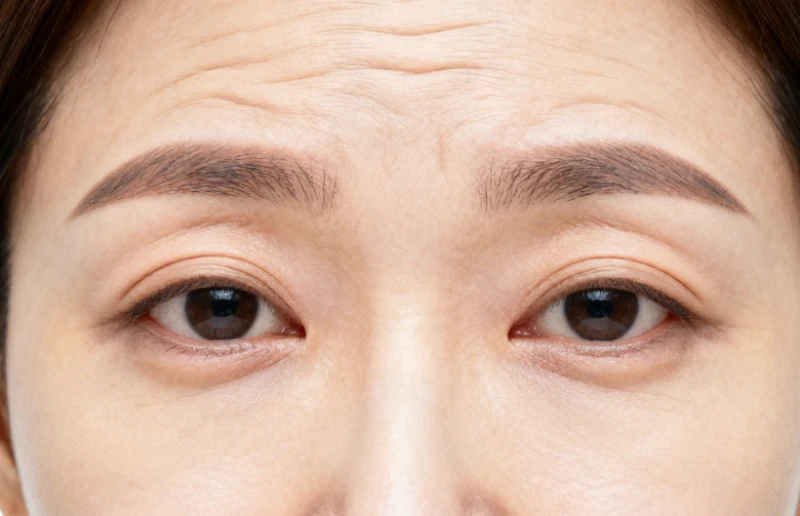
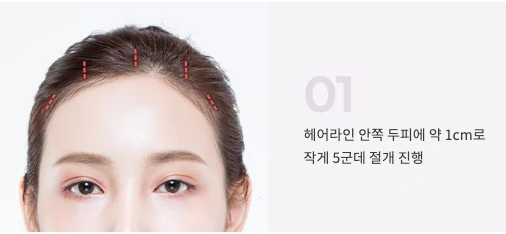
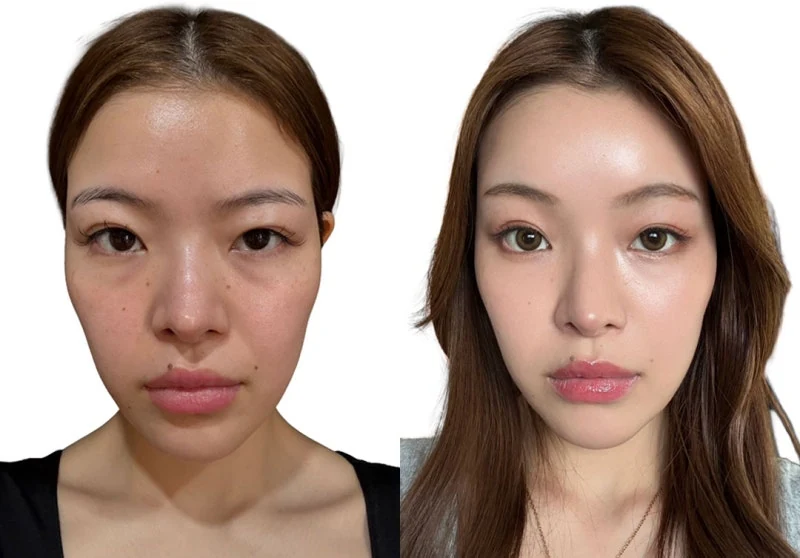
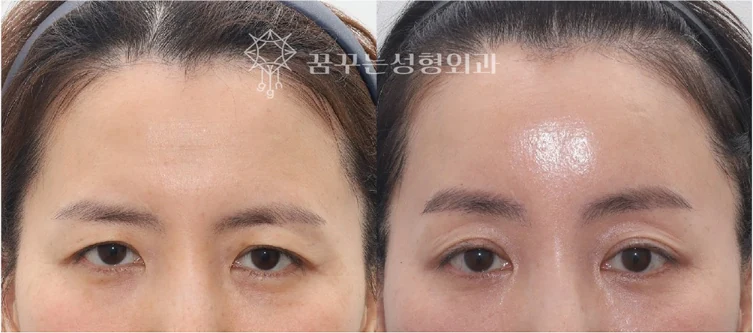
Small scalp incisions and an endoscope are used to reposition descended forehead and brow tissues. Reducing tissue hooding is different from correcting the muscle that lifts the eyelid.
2. How does it differ from double-eyelid surgery?
Double-eyelid surgery mainly creates or adjusts the eyelid crease; a brow lift addresses forehead and brow position. The cause of the concern determines the choice.
3. When might an assessment help?
Brow descent, forehead effort when opening the eyes, or persistent heaviness after eyelid surgery may warrant an anatomical assessment.
4. How is it performed?
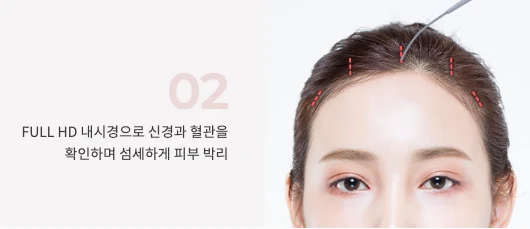
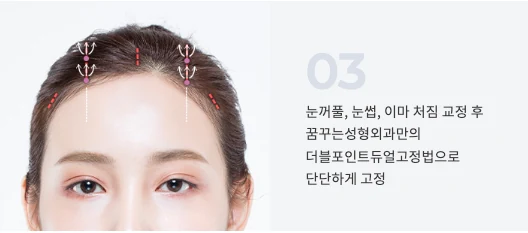
The source describes scalp incisions, FULL HD endoscopic visualization of nerves and vessels, tissue release and a double-fixation technique. The actual extent and fixation method are decided after examination.
5. How long does it take, and what anesthesia is used?
The source gives approximately 90 minutes, sedation and same-day discharge. Duration, anesthesia and discharge plans can vary with surgical extent, combined procedures and health; confirm them when booking.
6. What is the recovery timeline?
The source describes staple removal at 8–10 days and reduction of swelling over roughly 1–2 weeks. Some people resume daily activities around one week, but recovery is not necessarily complete at two weeks and varies individually.
7. What about scars?
Incisions are placed within the scalp to help conceal scars. This does not mean scar-free surgery; visibility depends on the hairline and healing.
8. Is it painful?
Anesthesia and prescribed postoperative care help manage pain. Tightness or pressure can occur and varies by person. Contact the clinic for worsening or unexpected pain.
9. How long do results last?
Repositioning can improve descent, but natural aging continues. Duration varies with skin condition and surgical extent; a fixed lifespan cannot be guaranteed.
10. What supports a natural appearance?
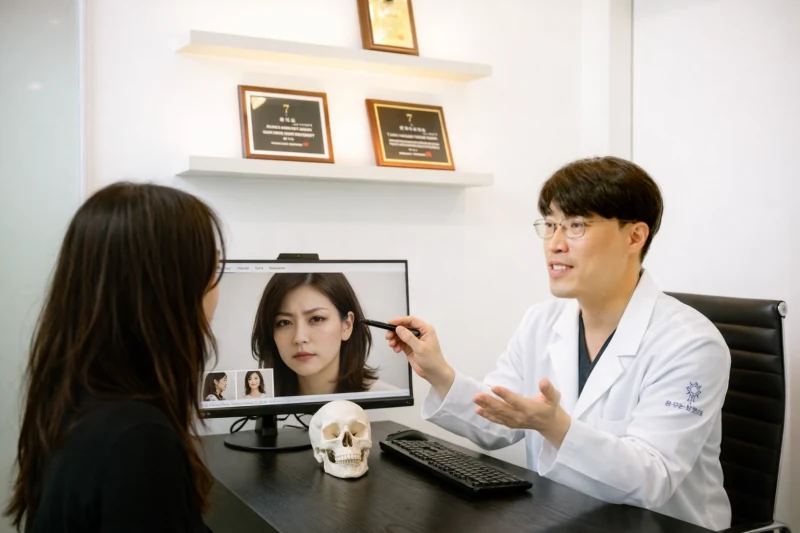
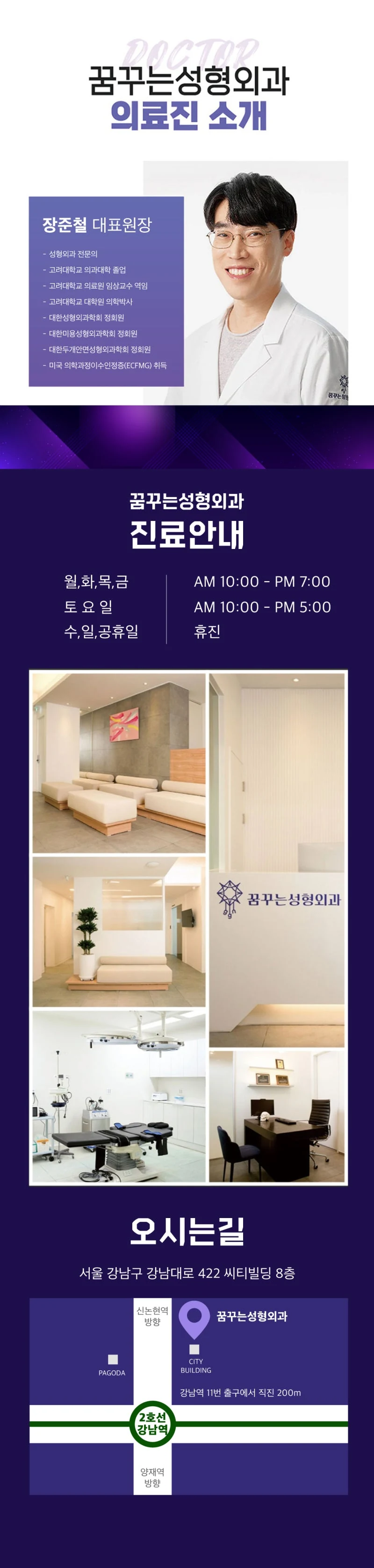
Planning should respect facial proportions and the original expression rather than simply raising the brows as high as possible. At GGN, the director personally consults and operates, discussing the appropriate extent of treatment.
Original images · Korean text within images is retained.
Read alongside the images
Small scalp incisions and an endoscope are used to reposition descended forehead and brow tissues. Reducing tissue hooding is different from correcting the muscle that lifts the eyelid.
Double-eyelid surgery mainly creates or adjusts the eyelid crease; a brow lift addresses forehead and brow position. The cause of the concern determines the choice.
Adapted from the original for general information. Suitability, risks and recovery plans require an individual consultation.