

My under-eyes look dark even after enough sleep.
Will I still need concealer after under-eye fat repositioning?
If both under-eye bags and dark circles concern you, you may wonder whether one operation can improve both.
Under-eye fat repositioning may reduce shadows caused by uneven contours. However, dark circles have several causes, and surgery alone cannot be expected to remove them completely in every case. Skin colour and thickness, visible vessels and the depth of the tear trough all need assessment.[1][2]
Dark circles can look similar but have different causes
Dark circles describe a darkened appearance beneath the eyes. That appearance does not always come from fat, nor does it always mean there is excess pigment in the skin.
| Why the under-eye area looks dark | What you may notice | What fat repositioning may change |
|---|---|---|
| Shadows from protruding fat and a tear trough | A dark boundary below a raised area | Smoother contours may reduce the shadow |
| Skin pigmentation | The skin itself looks darker or brown | Repositioning fat alone is unlikely to improve pigment |
| Thin skin and visible blood vessels | A blue or purple tone may show through | The effects of skin and vessels may remain |
More than one cause can be present in the same person. Colour alone cannot reliably identify the cause or establish whether surgery is needed.[1][3]
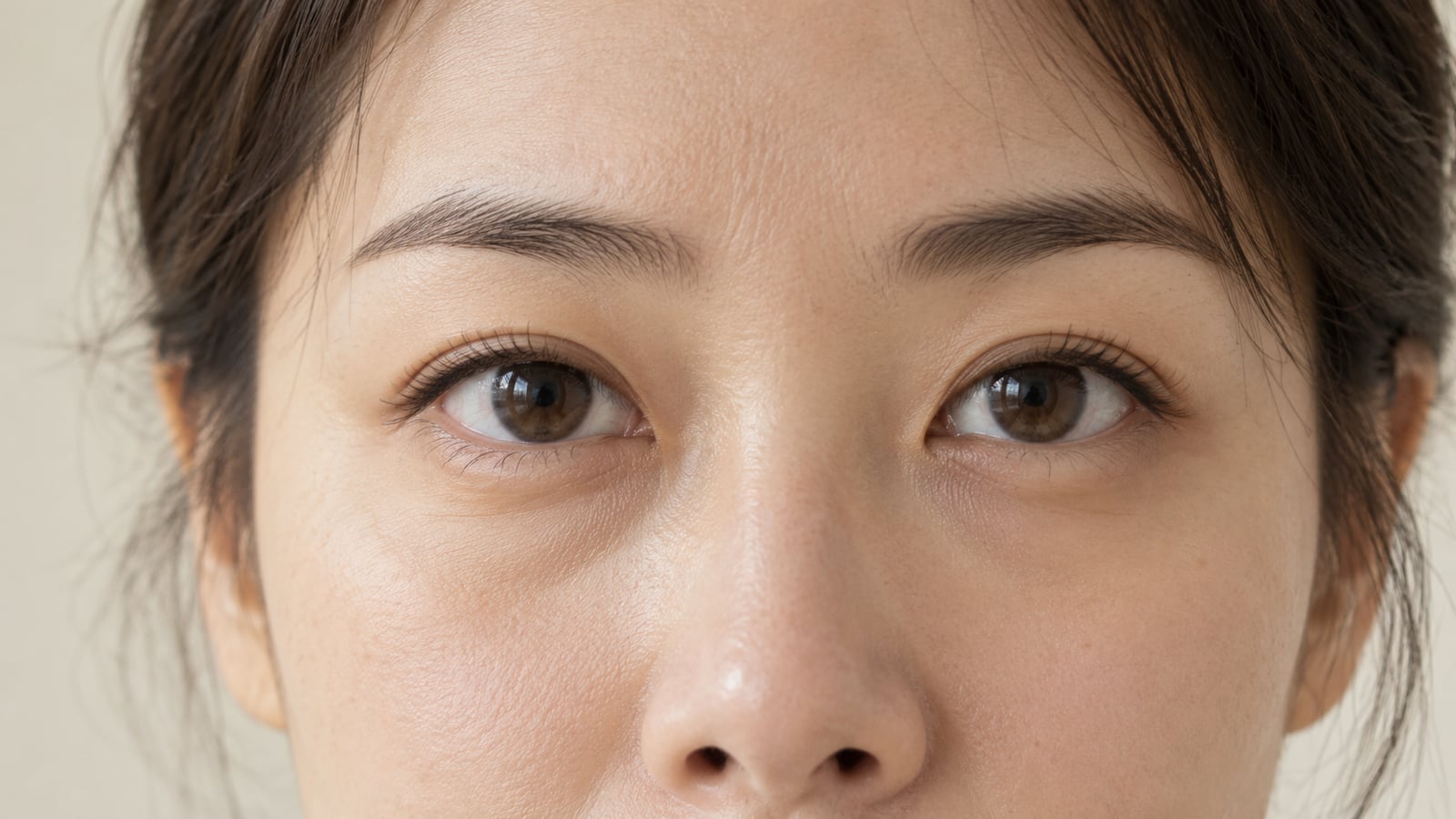
Which dark circles may respond to fat repositioning?
When fat beneath the eye protrudes above a hollow tear trough, the difference in height can cast a shadow. This boundary can make the under-eye area look darker and more tired.
Fat repositioning adjusts the position of under-eye fat to soften the transition between the bulge and hollow. Smoothing the junction between the lower eyelid and cheek may improve darkness caused by structural shadows.[2]
If you have both a bulge and a deep groove beneath it, an examination can help determine whether this procedure is suitable. The expected change concerns contours and shadows; a change in the skin's actual colour needs separate assessment.
Why dark circles can remain after surgery
Pigmentation or blood vessels visible through thin skin can leave a dark tone even after fat is repositioned. Allergies, dermatitis and frequent eye rubbing can also contribute.[1]
As well as asking how noticeable your dark circles are, consider these questions at consultation:
- How much of the darkness comes from protruding fat and the tear trough?
- Does skin colour or thin skin also contribute?
- Which aspects may improve with surgery, and which may remain?
When causes overlap, some colour may remain even after the contour becomes smoother. Your clinician can assess whether separate skin treatment would be appropriate. Additional treatment is not necessary for everyone; the approach depends on the cause and skin condition.[3][4]
Loose skin may require a different surgical plan
If dark circles are accompanied by loose skin or wrinkles, it is important to assess whether repositioning fat alone would be sufficient.
A transconjunctival approach, through the inside of the eyelid, can redistribute fat but does not itself remove loose skin. Depending on excess skin and lower-lid support, lower blepharoplasty that also addresses the skin may be considered. The extent of surgery should be based on the tissues themselves, rather than age alone.[4][5]
Does early darkness mean the operation did not work?
Soon after surgery, bruising and swelling can temporarily make the area look darker or uneven. Results emerge gradually as these changes settle, so the early appearance is not a reliable basis for judging the final result.[4]
Follow your surgical team's advice and attend follow-up visits. Once adequate healing has taken place, any remaining darkness can be assessed again.
For information about returning to work, makeup and contact lenses, read our recovery guide. When can I return to work? Under-eye fat repositioning recovery

Discuss the expected extent of improvement
Be specific about the change you want. Whether your main concern is a bulge, a deep groove or the colour of the skin will help guide the consultation.
Tell your clinician about previous eye surgery, under-eye treatments and eye conditions such as dry eyes. Planning requires assessment of both the surrounding anatomy and your health.[5]
During your under-eye fat repositioning consultation at GGN Plastic Surgery, explain what bothers you most and what you hope will change. Decide whether to have surgery after understanding the improvement that may be possible for your own under-eye area and the recovery involved.
This article provides general medical information. Suitability, results and recovery vary between individuals. Eyelid surgery can cause complications including bleeding, infection, dry eyes and changes in eyelid position. Discuss the benefits and risks fully with your clinician.[6]
References
- Cleveland Clinic — Dark circles under eyes
- American Society of Plastic Surgeons — Important considerations in eyelid rejuvenation
- American Society of Plastic Surgeons — A true awakening: procedures to eliminate undereye bags
- American Society of Plastic Surgeons — Eyelid surgery procedure
- Cleveland Clinic — Eyelid surgery
- American Society of Plastic Surgeons — Eyelid surgery risks and safety